A knocked-out permanent tooth is a dental emergency. Handle it by the crown, keep it moist, and get emergency dental care straight away – the sooner the tooth is back in place, the better its chances.
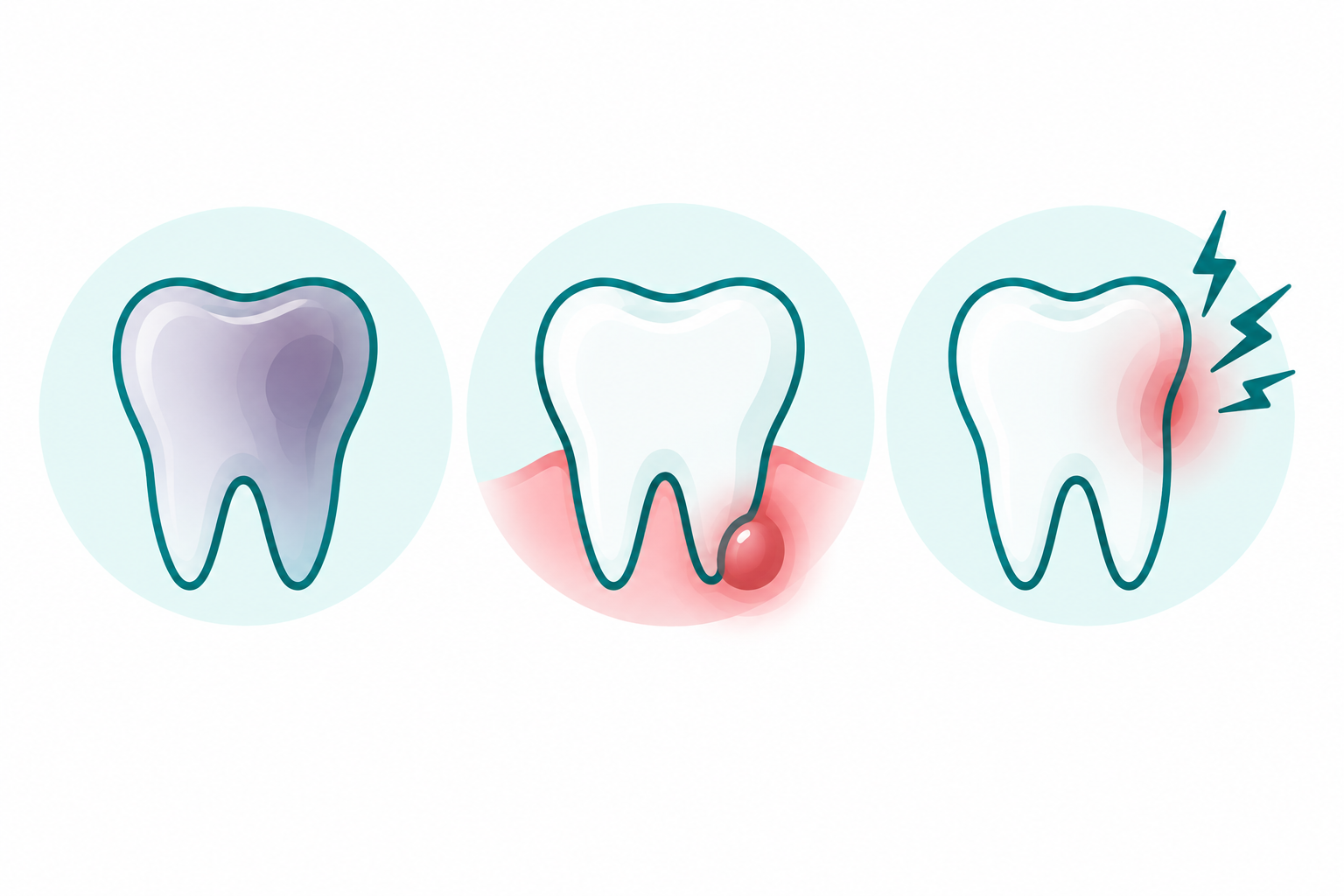
Do not put a baby (milk) tooth back in. This guide is for permanent (adult) teeth only. If you’re not sure which type of tooth has come out, check our guide on telling a baby tooth from a permanent tooth, or look for these quick clues:
Yes, if:
Don’t attempt it if:
If you do replace it, get the person to gently bite on a clean cloth or handkerchief to hold it in place, then go straight to emergency care. If you don’t, that’s not a mistake – safe storage and a fast dentist visit still gives a good chance.
| Do use | Avoid |
|---|---|
| Milk | Tissue or paper towel |
| The person’s own saliva, in a clean container | Loose in a child’s cheek (swallowing risk) |
| A tooth-preservation solution, if available | Plain water |
| – | Leaving it dry |
Milk and saliva keep the root’s surface cells alive; water and dryness kill them. This is one of the most consistent points across every major guideline, because it makes a measurable difference to whether the tooth can reattach.
This is a genuine emergency. Aim to be seen as soon as physically possible – don’t treat any specific number of minutes or hours as a deadline to wait until, and don’t treat it as a point after which there’s no reason to hurry.
I can’t find the tooth.
Check the area carefully, including clothing and any grass or debris. If it genuinely can’t be found, or if you think it might have been swallowed or inhaled (for example, after a fall with breathing difficulty or coughing), still go for emergency care straight away and mention this – a chest X-ray may be needed to rule out inhalation. See our missing tooth guide.
The tooth is dirty and I’m worried about rinsing it wrong.
A brief, gentle rinse under cold running water is fine if there’s visible dirt. The aim is just to remove debris, not to sterilise it – a few seconds is enough.
The person is too distressed to let me put the tooth back in.
Don’t force it. Move straight to safe storage (milk or saliva) and get to emergency care as quickly as possible – a dentist can replant it there.
I’m not sure if it’s a baby or permanent tooth.
Treat it cautiously: don’t attempt to replant it, store it safely as above, and get professional advice urgently either way.
The steps above don’t change, but who does what does:
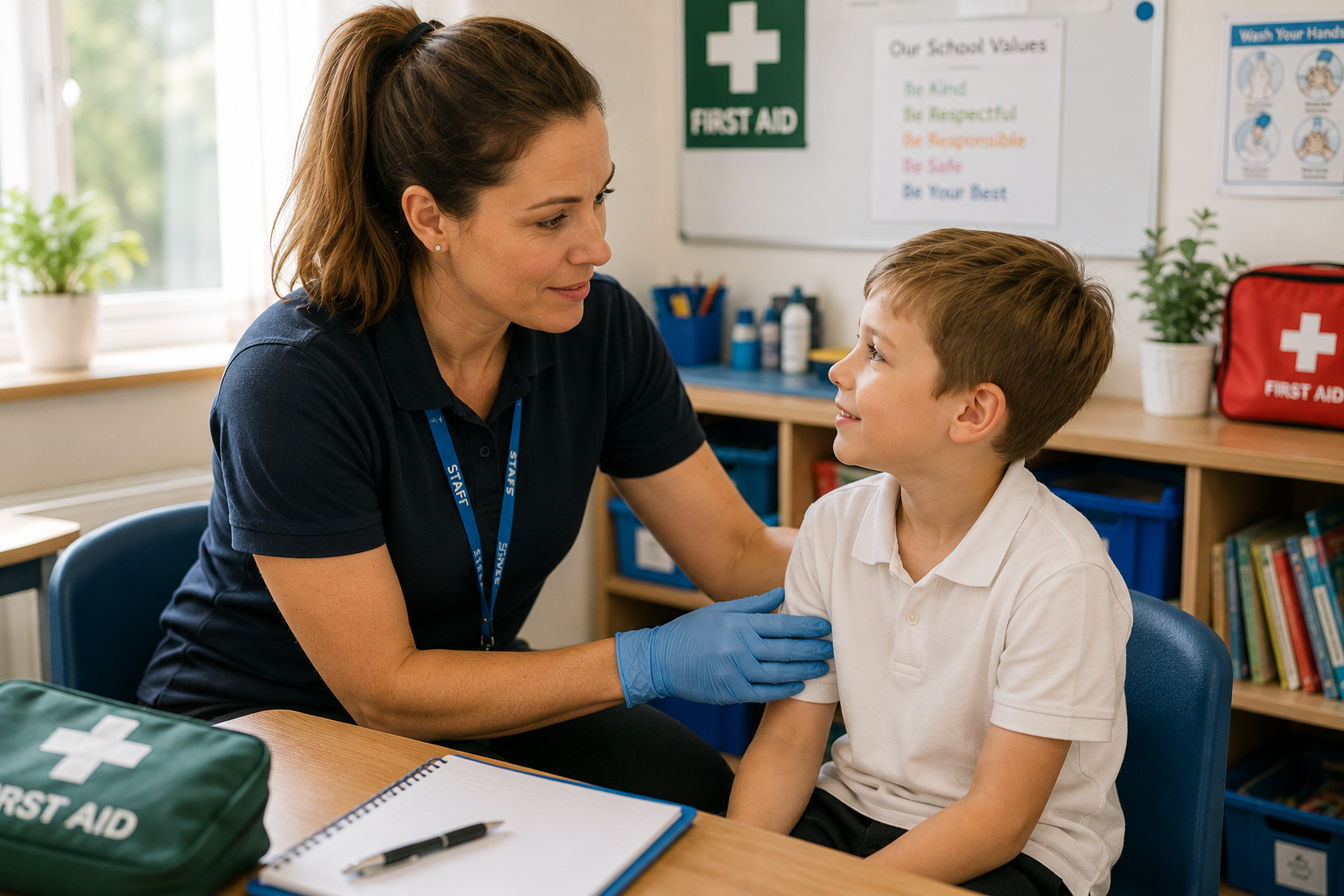
At school or nursery: One member of staff should manage the tooth (find it, store it, keep it safe) while another contacts the parent or carer and arranges transport to emergency dental care. Record the incident once the immediate response is underway, not before. See Dental Trauma First Aid for Schools.
On the sports pitch or in a club setting: The coach or first aider handles the tooth and storage; someone else contacts the parent and, where relevant, arranges the fastest route to a dentist. See Dental Trauma First Aid for Sports Coaches and download the Dental Trauma Decision Flowchart to keep pitchside.
At home: A parent or carer usually manages both the tooth and the phone call – having a dentist’s emergency number and NHS 111 saved in advance removes one thing to think about in the moment.
At the appointment, the dentist will assess the tooth and socket, and – if it hasn’t already been replanted – will usually reposition the tooth and splint it to the neighbouring teeth to hold it steady while it heals. They’ll normally recommend a course of follow-up appointments over the following weeks and months to check how the tooth is settling, and may prescribe antibiotics or recommend a tetanus check depending on how the injury happened. Root canal treatment is often needed at a later stage, particularly for teeth that were out of the mouth for some time before being replanted.
Every case is different, and the dentist will explain what to expect for this specific tooth. Replanting a tooth quickly and correctly gives it the best chance, but there’s no way to guarantee the outcome in advance.
Once the immediate emergency is dealt with, you’ll likely have questions about eating, brushing, pain relief, and what changes to watch for. See:
Most people reading this today aren’t in the middle of an emergency – they’re making sure they’d know what to do if one happened. The Knocked-Out Tooth Poster puts these steps on one page, sized for a kitchen, first-aid room, or kit bag. Download free
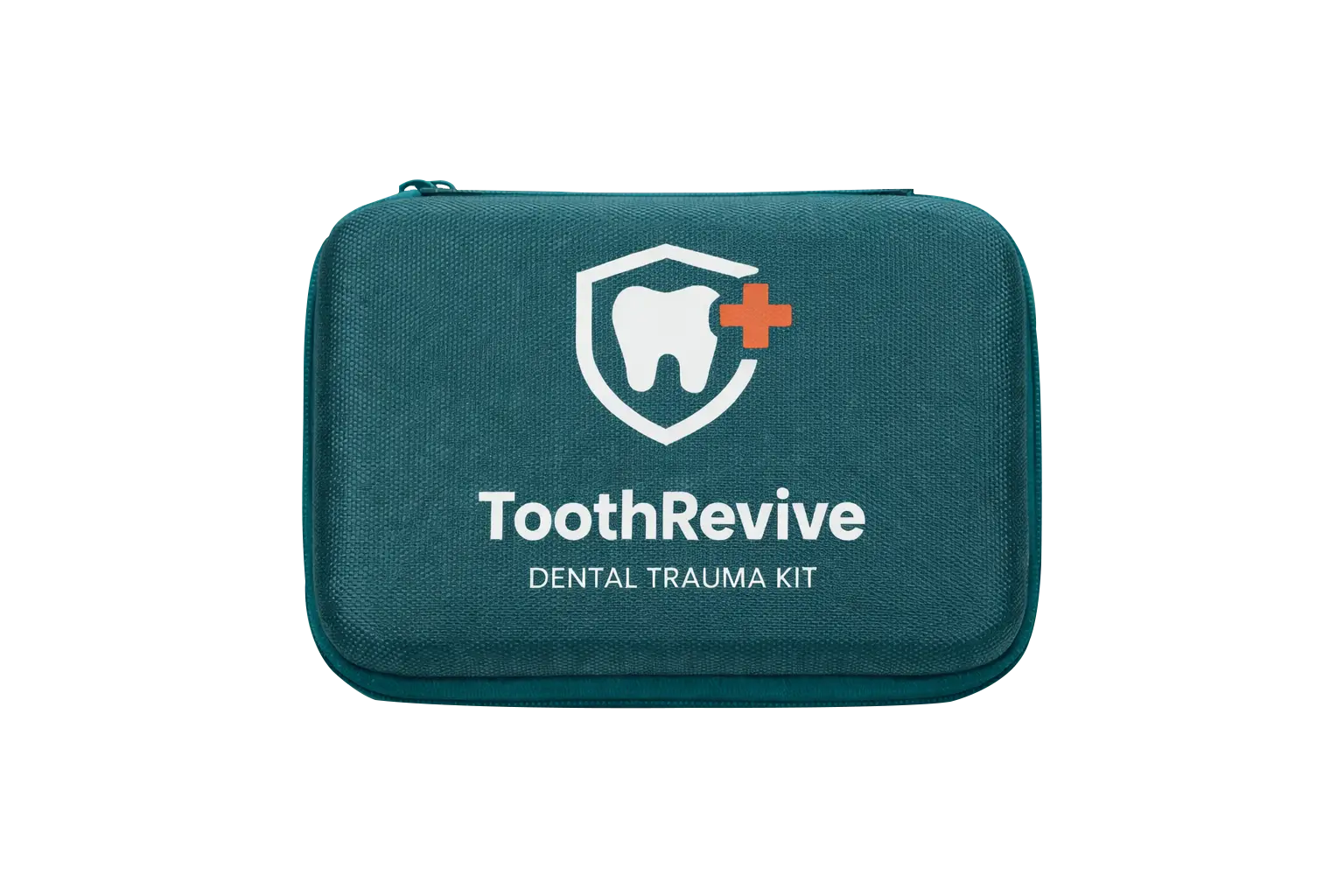
Knowing the steps is the first part. Having the right things on hand – a way to store the tooth properly, without having to search for milk or a clean container in the moment – is the other. A dental trauma kit kept at home, at school, or pitch-side means one less thing to figure out while you’re getting to emergency care. Learn about the ToothRevive Kit
This guide does not replace assessment by a dentist or emergency service. It reflects current international and UK guidance as at 14 August 2026, reviewed by Dr Yousuf Ibrahim, BDS.
About the author
General Dental Practitioner and Founder of ToothRevive
Published on dentistry.co.uk: “Dental trauma is a first aid problem, not just a dental one”, 7 October 2026.
The first few minutes can make all the difference.
Our Dental Trauma Kit contains everything you need to act fast and protect a knocked-out tooth.
Enter your email to unlock this free resource.
Clinically verified
Written by Dr Yousuf Ibrahim, a UK-registered dentist, in line with current dental trauma clinical guidelines.