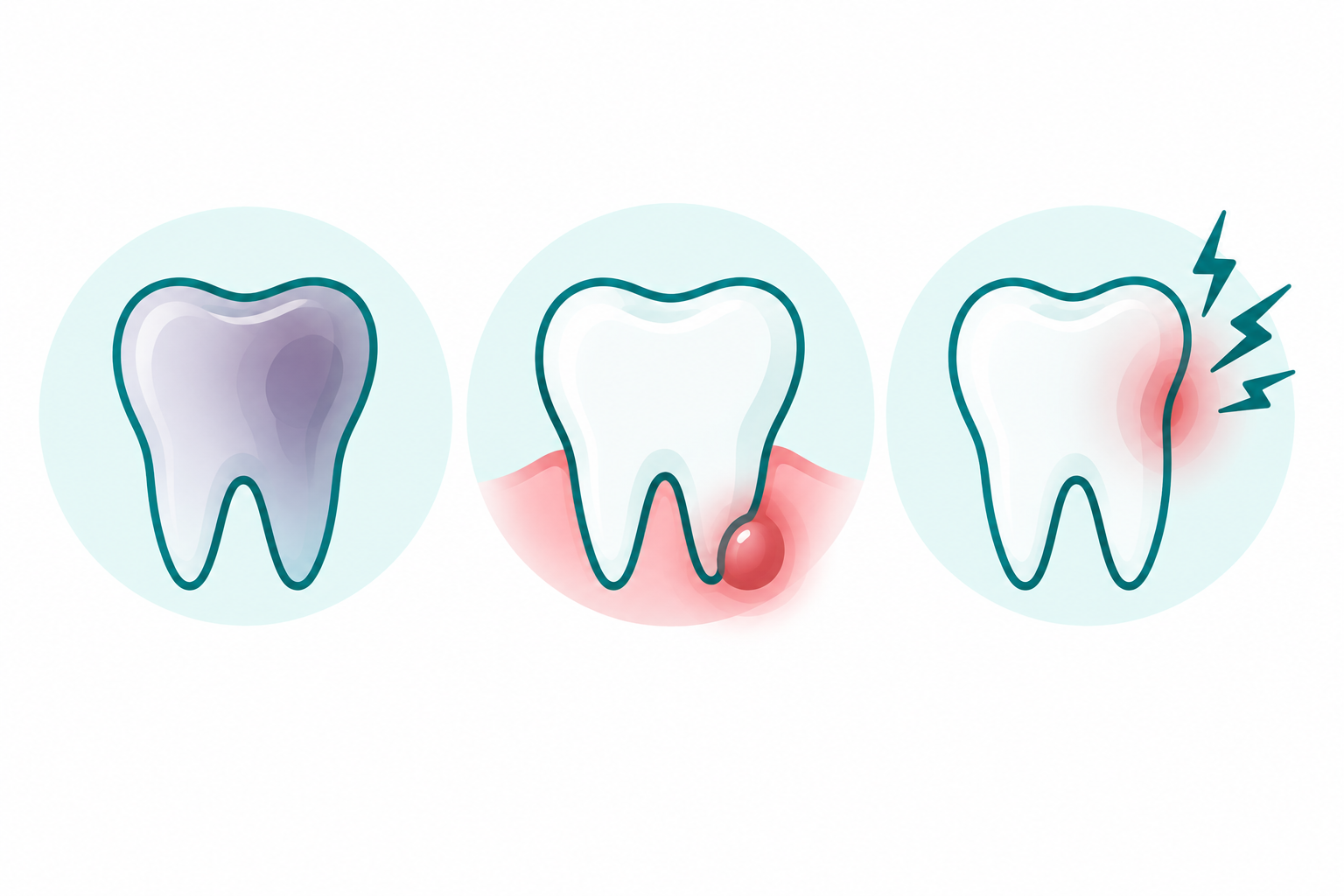
Most dental injuries heal without further problems once the initial treatment is done. But a tooth’s nerve can occasionally be affected by an injury even when everything seemed fine at first — sometimes weeks or months later, and often without warning. Knowing what to look for means you catch it early, when treatment is simplest.
Every tooth has a nerve and blood supply running through its centre. An injury — even one that looked minor, or one where the tooth itself was successfully saved — can sometimes damage this without it being obvious straight away. The tooth can look and feel completely normal for weeks, then start showing signs that something has changed. This isn’t a sign that anything was done wrong at the time; it’s a known, documented possibility with traumatic dental injuries, which is why follow-up matters as much as the initial response.
There’s no fixed timeline — it varies by injury type, by tooth, and by individual. Some changes appear within a few weeks; others take months. This is exactly why a single follow-up appointment isn’t always enough on its own, and why it’s worth knowing what to watch for yourself in the meantime, rather than assuming that “no news is good news.”
Yes, though the specifics vary slightly by injury:
For the initial first-aid steps for each of these, see the relevant guide:
Contact a dentist and explain that the tooth was previously injured, including roughly when and what happened. This isn’t usually a 999 or A&E situation — book at the earliest appointment available, sooner if there’s significant pain or swelling. If you’re unsure where to go, see dentist, NHS 111, A&E or 999.
If you were given a follow-up appointment by a dentist, it’s worth keeping it even if the tooth looks and feels fine — some changes aren’t visible to you and are picked up on examination or an X-ray. If you weren’t given one and it’s been a while since the injury, it’s still reasonable to get the tooth checked, particularly for a permanent tooth that was knocked out, displaced, or significantly loosened.
Download the free Knocked-Out Tooth Poster to keep in your first aid room, sports bag or at home. Download free
This guide does not replace assessment by a dentist or emergency service. It reflects current international and UK guidance, reviewed by Dr Yousuf Ibrahim, BDS.
The first few minutes can make all the difference.
Our Dental Trauma Kit contains everything you need to act fast and protect a knocked-out tooth.
Enter your email to unlock this free resource.
Clinically verified
Written by Dr Yousuf Ibrahim, a UK-registered dentist, in line with current dental trauma clinical guidelines.