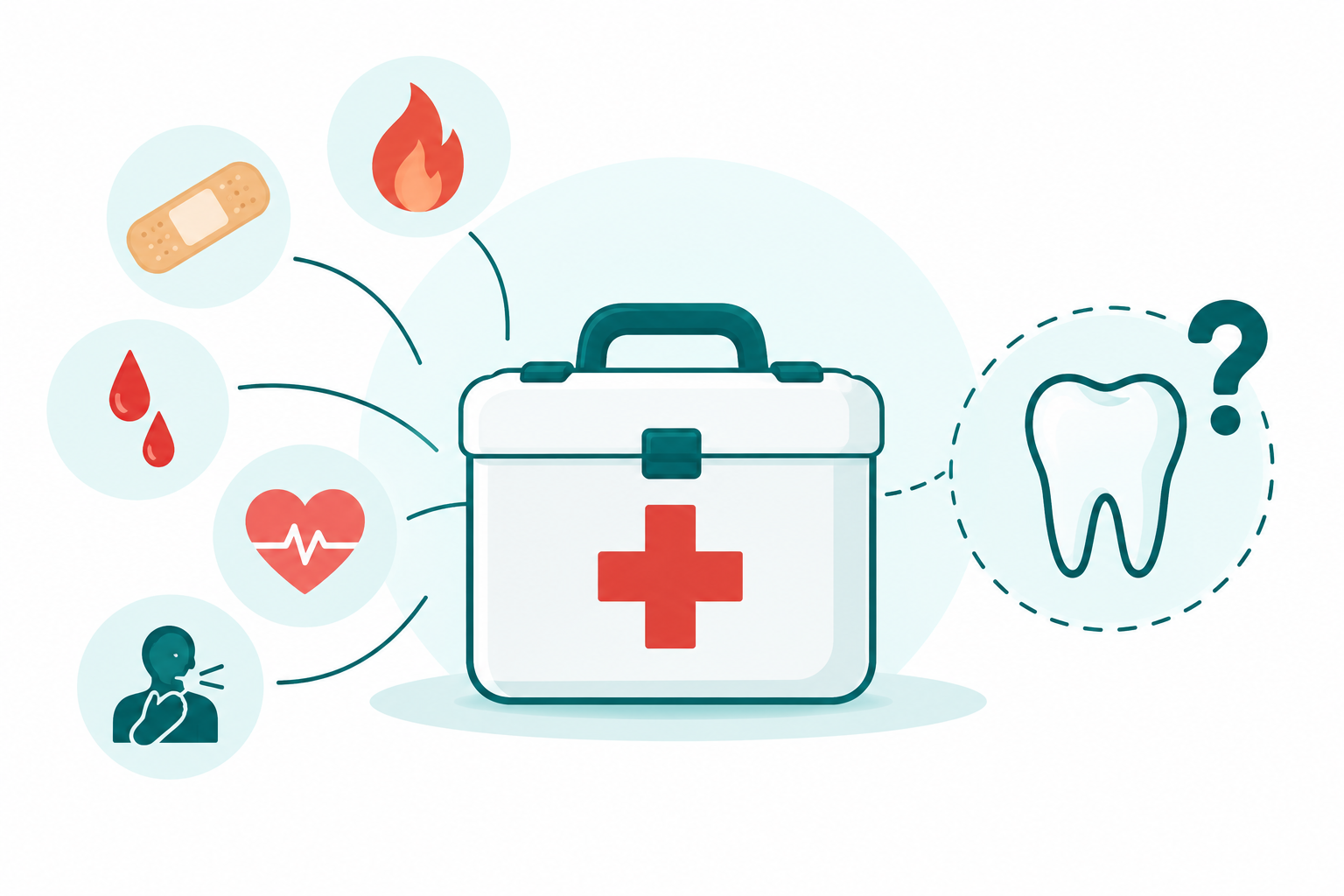
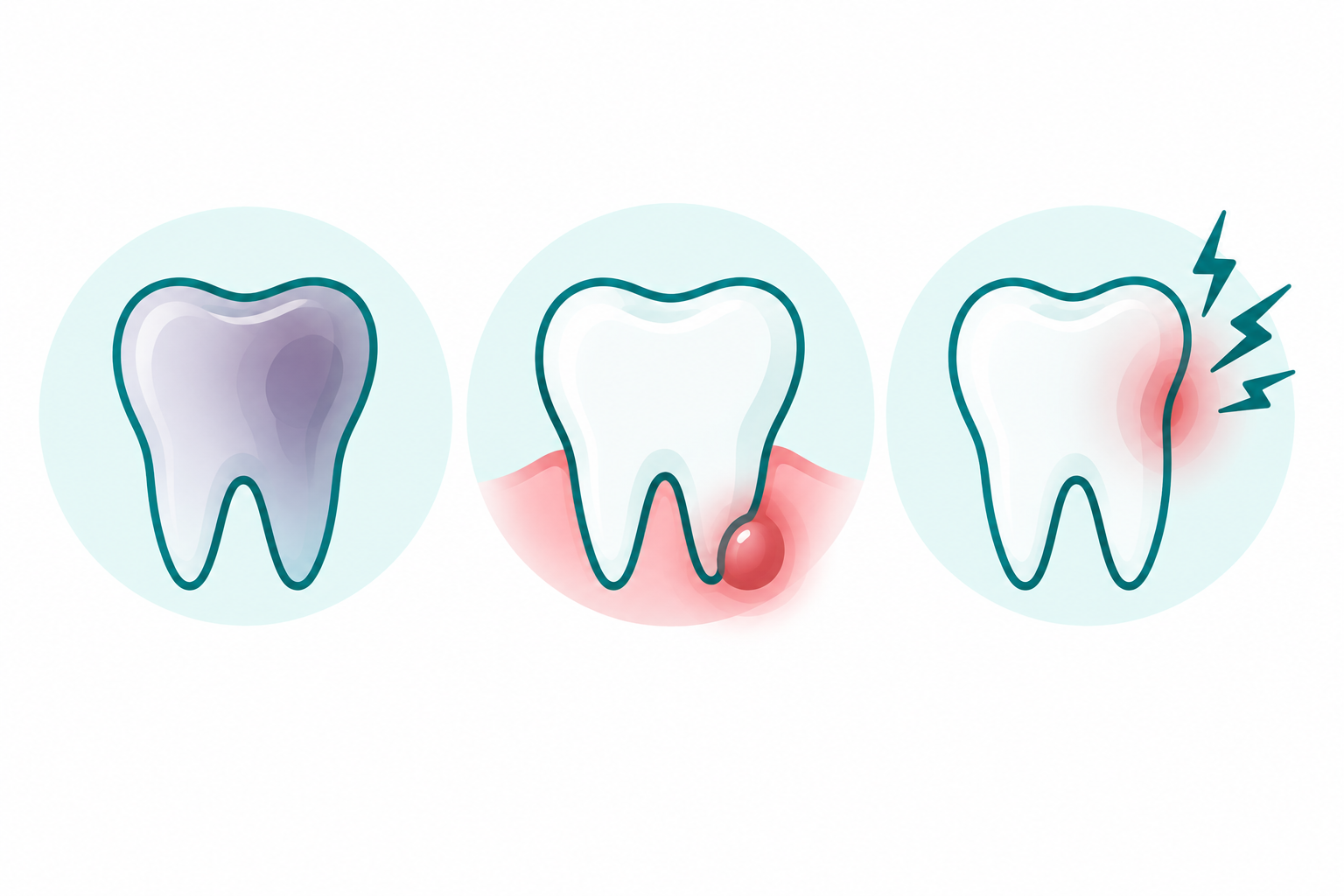
Four services can help after a dental injury, and it’s not always obvious which one. As a general rule: call 999 or go to your nearest A&E if there’s any concern about the airway, breathing, consciousness, or a serious facial injury. Otherwise, contact a dentist first, and use NHS 111 if you can’t reach one.
Which one do you need?
Call 999 or go to your nearest A&E if:
- The person is unconscious, or was knocked out even briefly
- There’s difficulty breathing or swallowing
- Bleeding from the mouth won’t stop with firm pressure
- You suspect a broken jaw or facial bone — visible deformity, can’t close the mouth normally, severe swelling
- The injury happened alongside a more serious accident (a fall from height, a road incident, a heavy blow to the head)
Contact a dentist directly if:
Many dental practices provide emergency arrangements outside normal opening hours — an emergency telephone line, an answerphone message with next steps, or a local out-of-hours dental service. Try this first if a permanent tooth is involved — time matters more here than for most dental injuries.
Call NHS 111 if:
- You can’t reach your own dentist and need to find the nearest available urgent dental care
- You’re not registered with a dentist
- You’re unsure how urgent the situation is and want advice before deciding
Still unsure?
If you’re ever worried an injury is more serious than it first appears, seek urgent medical advice. It’s always safer to have something checked than to delay.
Why the dentist comes first for a knocked-out permanent tooth
A dentist can assess and, where appropriate, replant or stabilise a tooth — this isn’t something A&E departments are typically set up to do for a dental-specific injury without a dentist present. Going to A&E instead of a dentist for an isolated tooth injury (with no head, jaw or airway involvement) can mean losing time you don’t have. A&E is the right choice when there’s a wider injury to rule out first — not as a substitute for a dentist when the tooth is the only concern.
If you’re not registered with a dentist
You don’t need to be registered with a practice to get emergency dental care. NHS 111 can direct you to the nearest available urgent dental service, and many practices will see emergency cases from people who aren’t existing patients.
What to expect when you call
Whichever service you contact, be ready to explain:
- What happened and when
- Whether a tooth came out, chipped, or loosened — and whether you have the tooth
- The person’s age (baby vs permanent tooth advice differs)
- Any other injuries, however minor they seem
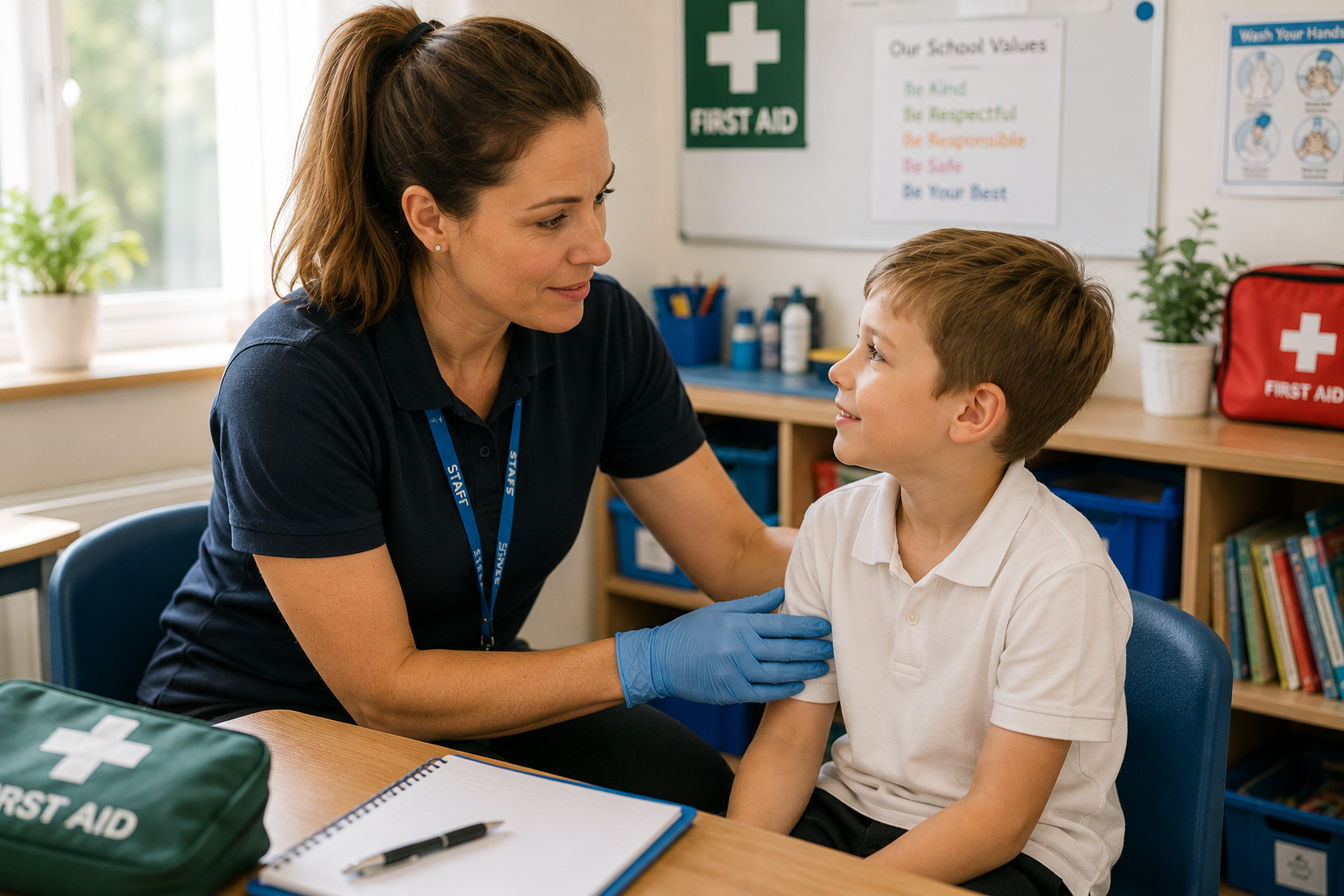
If this happens at school, nursery or a club
Agree in advance who makes the call in an emergency, so it isn’t decided in the moment. One person should stay with the injured person and manage the tooth, while another contacts a dentist or NHS 111 and notifies a parent or carer. See Dental Trauma First Aid for Schools and Dental Trauma First Aid for Sports Coaches.
Related guides
Print this before you need it
Download the free Knocked-Out Tooth Poster to keep in your first aid room, sports bag or at home, so the emergency steps for a knocked-out tooth are easy to find when they’re needed most. Download free
References
- NHS, Knocked-out tooth, nhs.uk
- NHS, Find an urgent dentist, nhs.uk
This guide does not replace assessment by a dentist or emergency service. It reflects current UK guidance, reviewed by Dr Yousuf Ibrahim, BDS.