Falls, sports knocks, playground accidents — dental injuries in children are common, and most look more alarming than they turn out to be. Find your situation below for the exact steps to follow.
| If this happened… | Read this guide |
|---|---|
| A tooth came out completely | Permanent tooth knocked out / Baby tooth knocked out |
| A tooth is chipped or broken, but still in place | Chipped or broken tooth |
| A tooth feels loose or wobbly | Loose tooth after an injury |
| A tooth looks pushed in, out or sideways | Tooth pushed in, out or sideways |
| You’re not sure what kind of tooth it is | Baby or permanent tooth? |
| You’re not sure who to contact | Dentist, NHS 111, A&E or 999 |
If there’s also a head injury, loss of consciousness, or breathing difficulty, treat it as more serious — see dentist, NHS 111, A&E or 999.
A baby tooth should never be pushed or put back in; a permanent tooth often should be, if possible. Between roughly ages 6 and 12, children have both types at once, which is exactly when this matters most. If you’re not sure which type you’re dealing with, see how to tell a baby tooth from a permanent tooth.
Children often take their cue from the adult in the room. A calm, matter-of-fact response — even if you don’t feel calm — tends to help a child stay still and cooperative, which makes first aid easier for everyone.
The specific guide for the injury will tell you how urgent it actually is — you don’t need to guess.
Most dental injuries in children recover well when they’re assessed promptly. You don’t need to remember every detail — just recognise the type of injury and follow the right guide.
Download the free Knocked-Out Tooth Poster to keep on the fridge or in a first-aid drawer at home. Download free
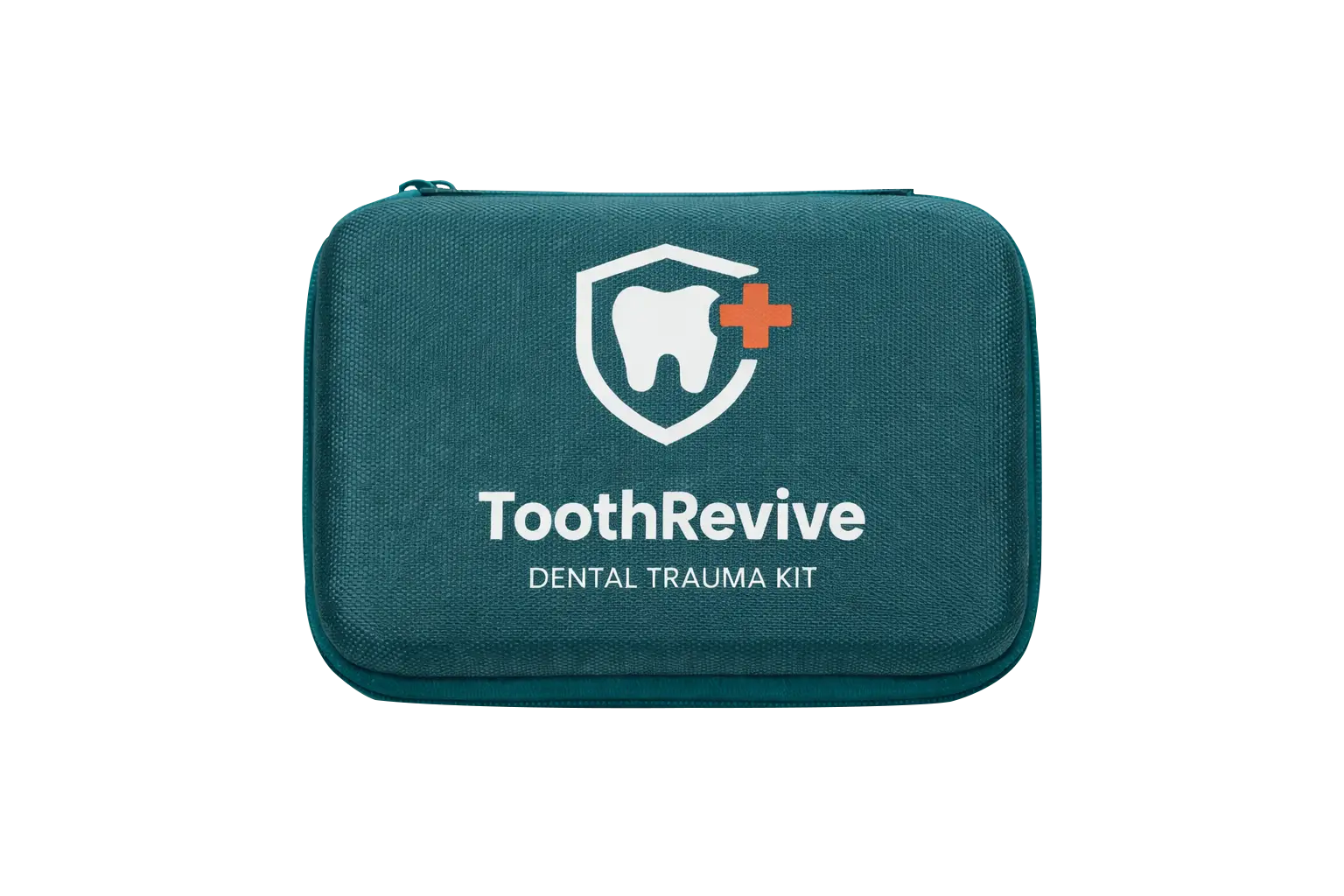
Being prepared also means having what you need on hand. Learn about the ToothRevive Kit
Very common — dental trauma is one of the most frequent childhood injuries, with falls, play, and sport being the leading causes, especially between ages 7 and 12.
Stay calm, find the tooth, and if it’s an adult tooth, store it in milk or a proper storage solution and get to a dentist within the hour. If it’s a baby tooth, don’t try to reinsert it, but still see a dentist to check for other damage.
Yes — adult teeth can sometimes be saved and re-implanted if you act fast, while baby teeth are not put back in, since this can harm the developing adult tooth underneath.
As soon as possible. A knocked-out permanent tooth needs emergency dental care — NHS guidance says this should be within 1 hour, or as soon as possible. A badly displaced tooth also needs urgent assessment, though not necessarily within a specific time window. Even a minor-looking chip or bump is worth a non-urgent dental appointment, as damage isn’t always visible.
You can reduce the risk with a properly fitted mouthguard for sports, close supervision during play, and keeping a dental trauma kit on hand at home, school, or in the sports bag.
This guide does not replace assessment by a dentist or emergency service. It reflects current international and UK guidance, reviewed by Dr Yousuf Ibrahim, BDS.
About the author
General Dental Practitioner and Founder of ToothRevive
Published on dentistry.co.uk: “Dental trauma is a first aid problem, not just a dental one”, 7 October 2026.
The first few minutes can make all the difference.
Our Dental Trauma Kit contains everything you need to act fast and protect a knocked-out tooth.
Enter your email to unlock this free resource.
Clinically verified
Written by Dr Yousuf Ibrahim, a UK-registered dentist, in line with current dental trauma clinical guidelines.