If a tooth has come out, this matters more than it might seem: never put a baby tooth back in, but put a permanent tooth back in if possible. Getting this wrong is the single biggest mistake in dental trauma first aid. Here’s how to tell the two apart quickly.
Is the child under 6?
→ Almost certainly a baby tooth. See what to do if a baby tooth is knocked out.
Is the child 12 or older?
→ Usually a permanent tooth by this age. See what to do if a permanent tooth is knocked out.
Between 6 and 12?
→ This is the mixed-dentition stage — children have both baby and permanent teeth at once, so age alone won’t tell you. Check size, colour and the neighbouring teeth below.
→ Still unsure after checking? See “If you’re still unsure” further down.
| Feature | Baby tooth | Permanent tooth |
|---|---|---|
| Typical age lost | 6–12 (varies by tooth) | Not usually lost at a young age except through injury |
| Size | Smaller | Noticeably larger |
| Colour | Whiter, almost milky | More yellow-white |
| Edges | Smooth, rounded | Often slightly ridged, especially if newly through |
| Root, if visible | Often already shortened or dissolving | Usually long and fully intact if freshly knocked out |
| If knocked out | Never replant | Replant if possible — see the permanent tooth guide |
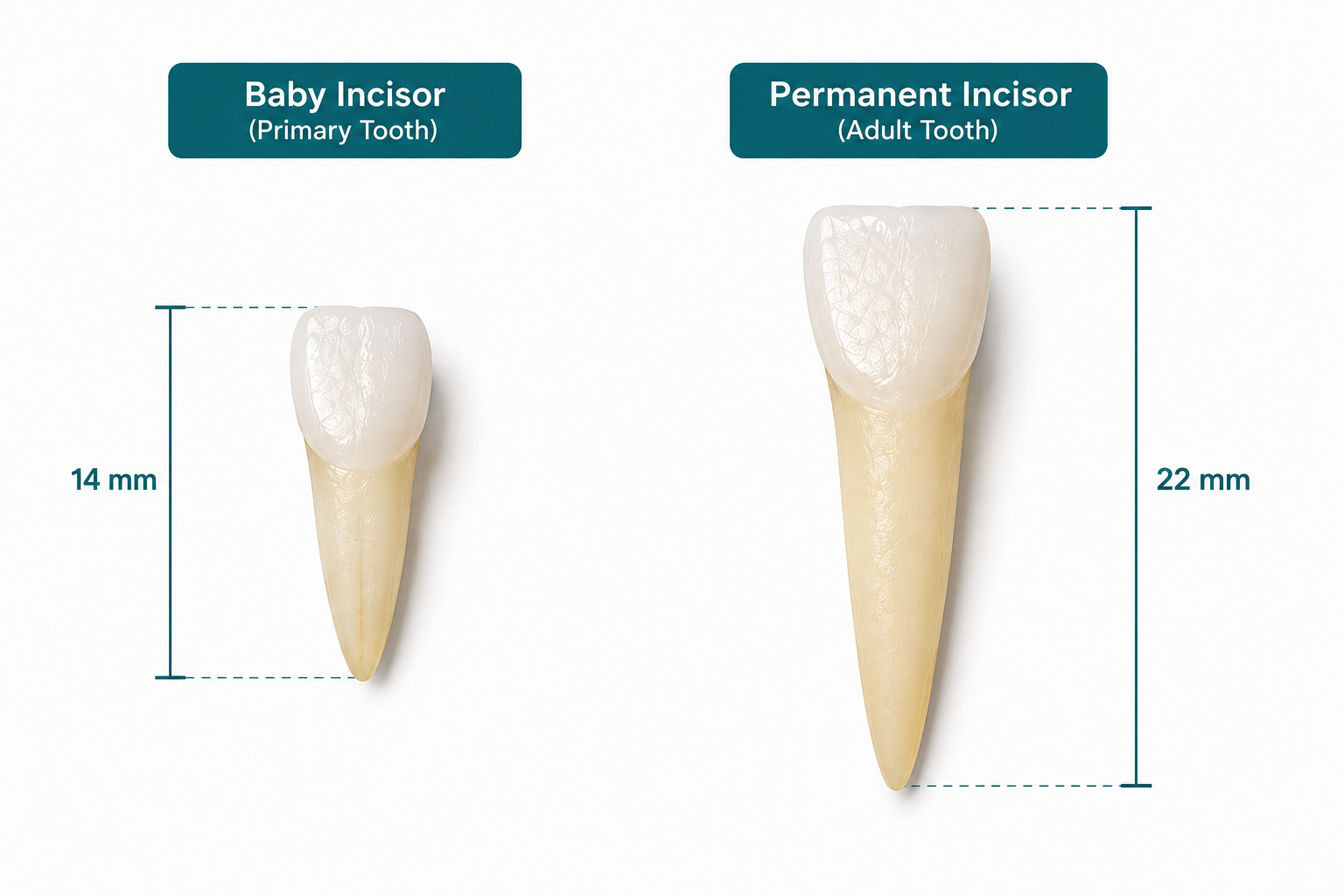
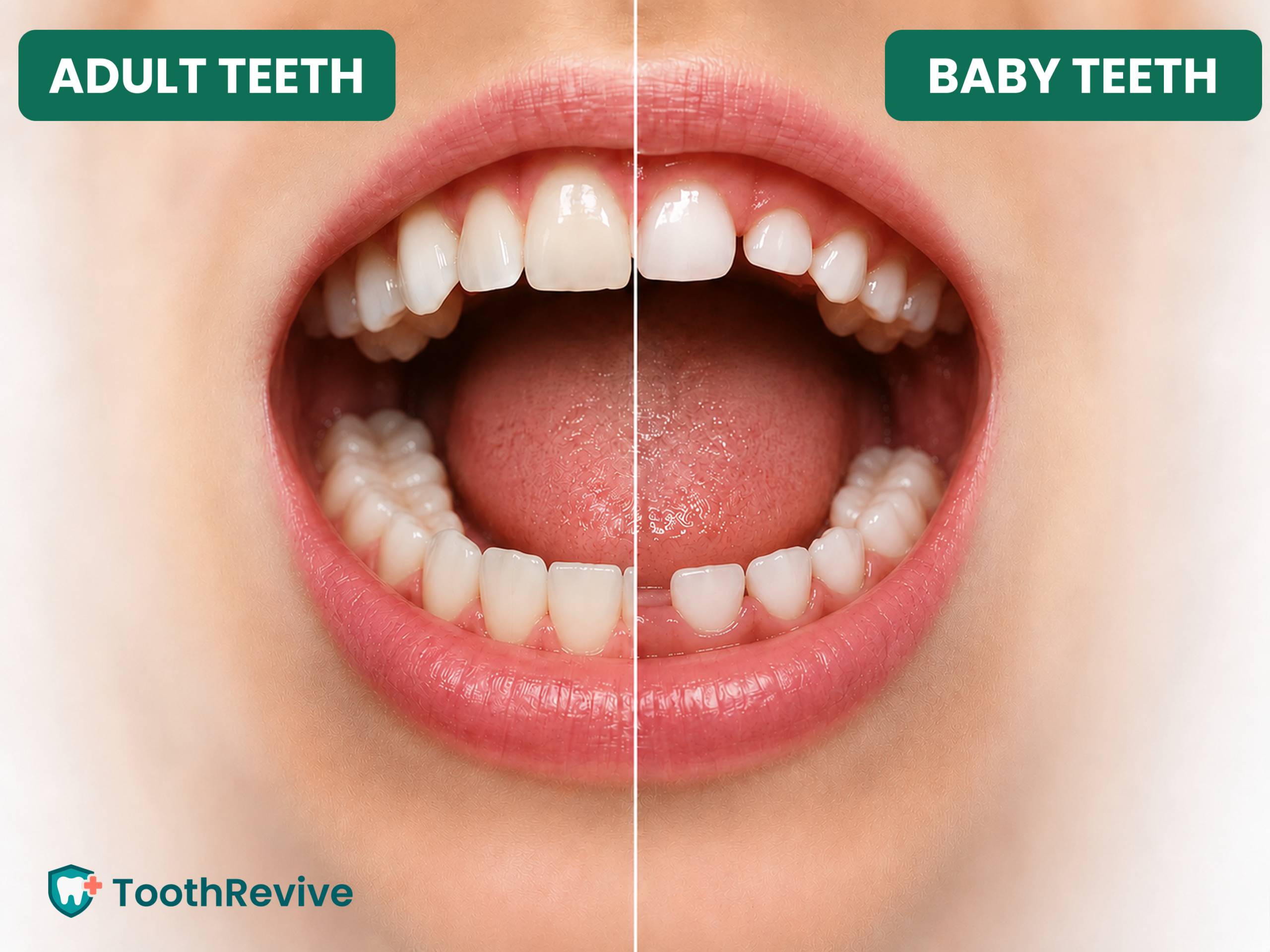
Look at the teeth either side of the gap. If the neighbouring teeth are clearly a mix of sizes — some noticeably bigger than others — the child is in the mixed-dentition stage, and you can’t rule out either type on age alone. If every visible tooth looks a similar, larger adult size, a freshly lost tooth is more likely to be permanent.
This isn’t a situation where guessing wrong is a small mistake — but it’s also not a situation to guess your way through. If there’s genuine doubt after checking the above:
A Baby or Permanent Tooth? quick-reference card is coming to the Download Centre — a phone-saveable and printable version of the comparison above. In the meantime, the Knocked-Out Tooth Poster covers the permanent-tooth emergency steps. Download free
Baby teeth are smaller and whiter, with a full set of 20 typically in place by age 3. Adult teeth are larger and slightly more yellow-white, starting to come through from around age 6.
The first aid response is different. Adult teeth can sometimes be saved and re-implanted, while baby teeth are never put back in — but both still need a dentist to check for damage to the root or the tooth developing underneath.
Most children start losing baby teeth around age 6, usually starting with the lower front teeth, with the process continuing until around age 12.
No. Re-inserting a baby tooth can damage the permanent tooth forming underneath. Instead, keep your child calm, control any bleeding, and see a dentist to check the area.
They can. A hard knock to a baby tooth can sometimes affect the developing adult tooth beneath it, which is why any dental injury in a young child should be checked by a dentist, even if the baby tooth itself seems fine.
This guide does not replace assessment by a dentist or emergency service. It reflects current international and UK guidance, reviewed by Dr Yousuf Ibrahim, BDS.