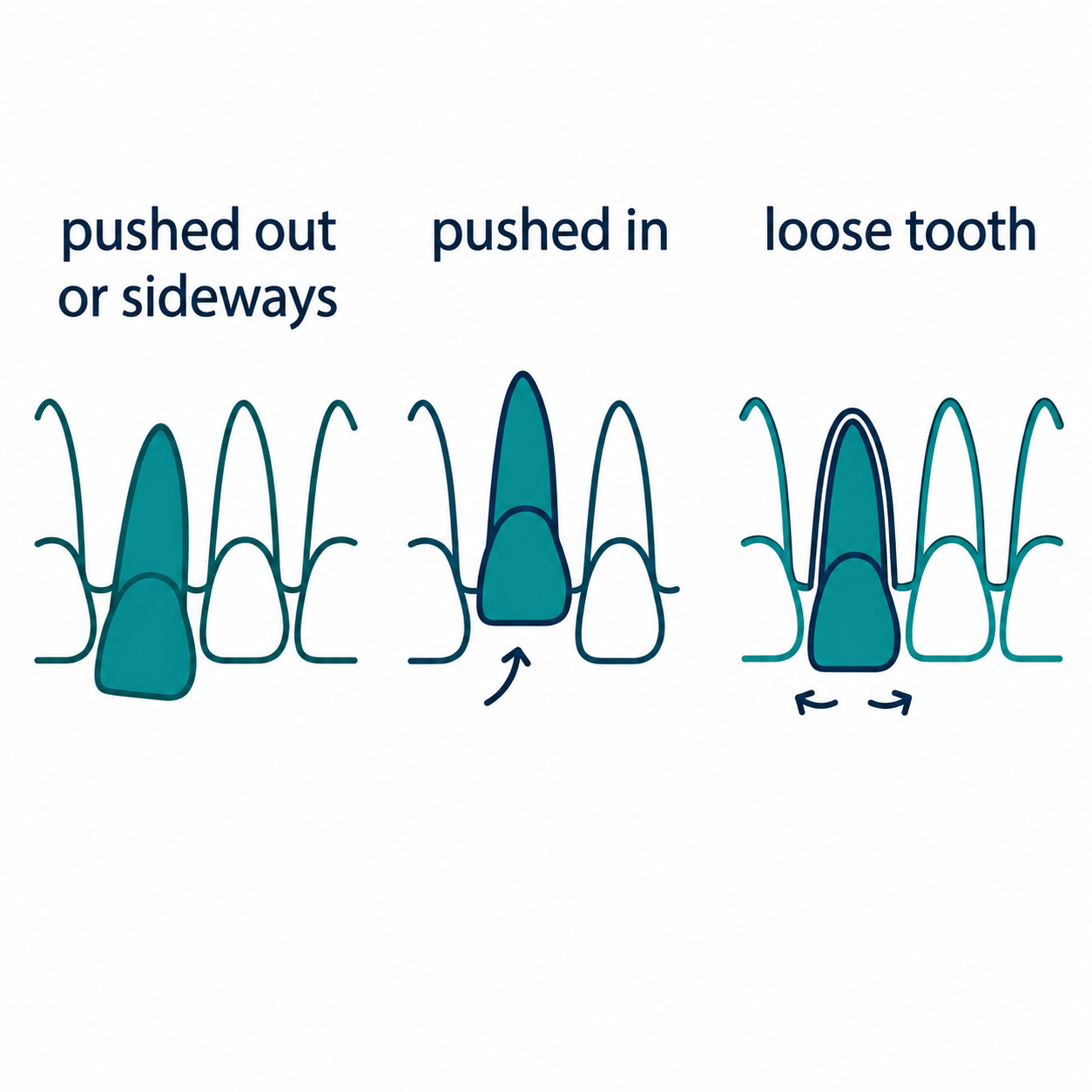
A tooth pushed deeper into the gum, partly out of its socket, or sideways needs urgent dental assessment. Do not try to move it back into place yourself. The right treatment depends on exactly how the tooth has moved, and on whether it’s a baby or permanent tooth — dentists manage the two differently.
This page is for a tooth that’s still attached but sitting in the wrong position. If the tooth has come out completely, see what to do if a permanent tooth is knocked out or what to do if a baby tooth is knocked out instead. If it’s just loose, without an obvious change in position, see what to do if a tooth becomes loose after an injury.
If it’s a permanent tooth that has visibly moved out of position, contact a dentist urgently and aim for assessment as soon as possible.
If it’s a baby tooth, it still needs prompt dental assessment, but treatment is often different from a permanent tooth, and may involve allowing the tooth to reposition itself naturally rather than immediate intervention. See “What if it’s a baby tooth?” below.
Pushed in (looks shorter than before, or has disappeared into the gum)
This is a significant injury, and treatment varies depending on how far the tooth has moved and how developed its root is — dentists monitor some cases to allow the tooth to settle back into position on its own; others need active treatment. Either way, it needs urgent same-day assessment so a dentist can decide the right approach.
Pushed out (looks longer than before, or is visibly hanging loose in the socket)
The tooth has partly come away from the socket but is still attached. This needs urgent same-day assessment — a dentist will usually need to gently reposition the tooth and hold it in place with a temporary splint while it heals.
Pushed sideways (tilted, or the bite doesn’t meet properly)
The tooth has moved forward, backward or sideways out of its normal alignment. It can sometimes feel quite firm, even though it’s clearly out of position, because it’s become wedged against the surrounding bone. This needs urgent assessment — a dentist will usually reposition and splint it.
Prompt assessment allows the dentist to identify the type and severity of displacement and choose the appropriate treatment — but dentists don’t treat every displacement the same way, and the dentist’s assessment (including how mature the tooth’s root is) determines what happens next.
The tooth looks shorter than it used to — what does that mean?
This usually means the tooth has moved further into the gum. For a permanent tooth, this needs urgent same-day assessment so a dentist can decide the right treatment — this can range from monitoring the tooth as it settles, to active repositioning, depending on the individual case. Treat this as urgent even without pain — intrusion injuries can be painless despite needing prompt assessment.
What if it’s a baby tooth?
Dentists manage baby teeth differently from permanent teeth. A dentist still needs to assess the injury, but dentists don’t automatically push a displaced baby tooth back into place. Dentists often allow an intruded baby tooth to reposition itself naturally — under current IADT guidance, this applies irrespective of the direction of displacement — which can take several months. A baby tooth pushed sideways or partly out may sometimes have dentists monitor it and allow it to reposition naturally if it isn’t interfering with the bite, depending on the degree of displacement and mobility. More significant displacement, marked looseness, or any risk of the tooth being swallowed or inhaled can change the treatment. Don’t try to reposition a baby tooth yourself — let the dentist decide the safest option.
Does this need splinting?
For a permanent tooth pushed out or sideways, often yes — a temporary splint holds it steady while it heals. For a permanent tooth pushed in, this depends on the individual case and is a decision for the dentist. Dentists frequently monitor baby teeth rather than splint them.
Depending on the type of displacement, the dentist may reposition and splint the tooth, or may monitor it while it settles or re-erupts naturally — this depends on which way the tooth moved, how far, and (for permanent teeth) how developed its root is. An X-ray often helps with the decision. Follow-up appointments over the following weeks and months are common, to check how the tooth is settling.
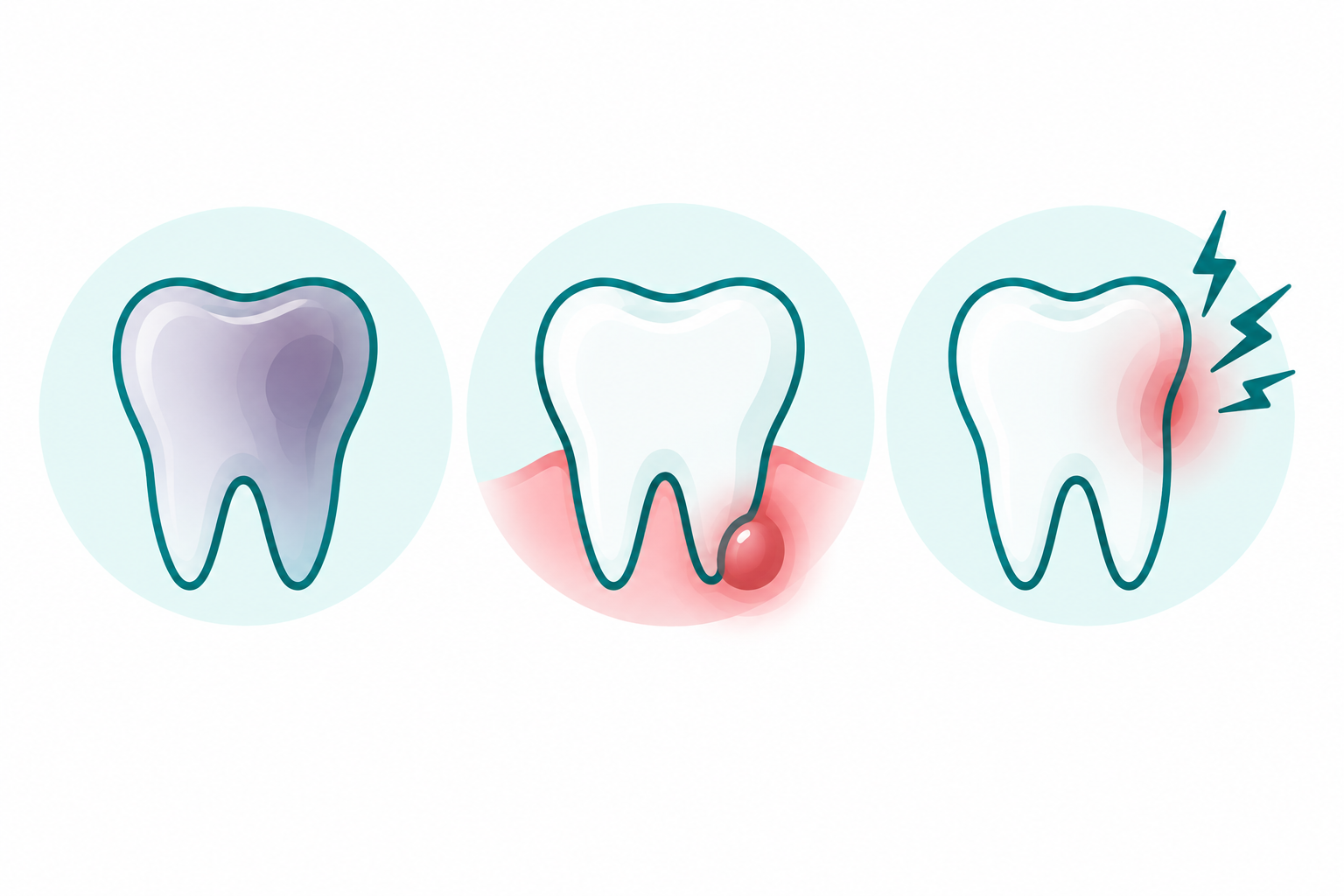
Once a dentist has treated the immediate injury, get the tooth checked again if you notice, in the weeks or months afterwards:
These can be signs that the injury has affected the tooth’s nerve and it needs further treatment — this is easily missed because it doesn’t always happen straight away.
Keep the person calm, discourage them from touching the tooth, and treat this as an urgent dental injury — arrange prompt dental assessment. See Dental Trauma First Aid for Schools and Dental Trauma First Aid for Sports Coaches.
Download the free Knocked-Out Tooth Poster to keep in your first aid room, sports bag or at home. Download free
This guide does not replace assessment by a dentist or emergency service. It reflects current international and UK guidance, reviewed by Dr Yousuf Ibrahim, BDS.