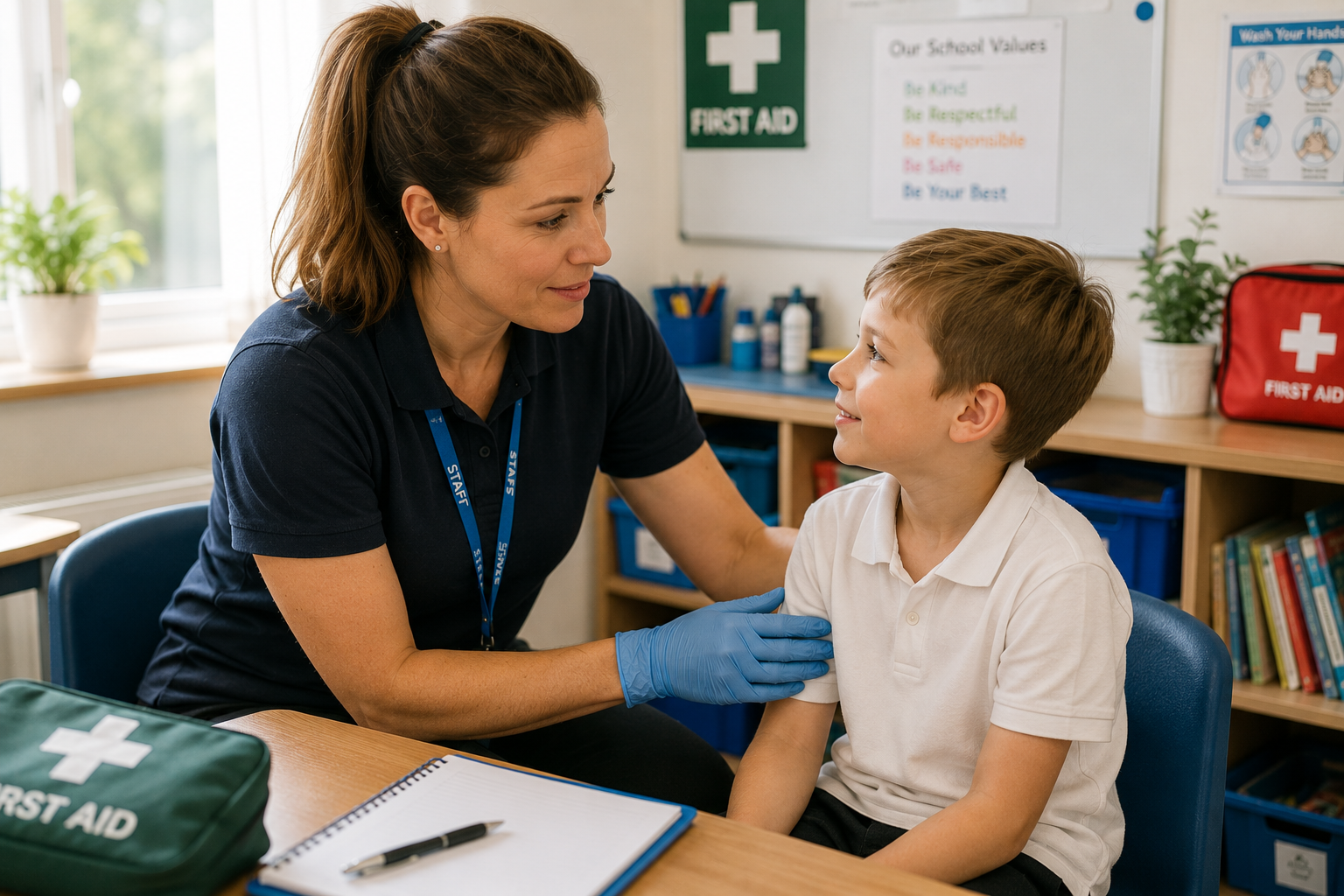
Bleeding from the mouth after a fall or knock looks dramatic, but most of the time it settles with firm, steady pressure. Press a clean cloth or gauze on the area for 10 minutes without lifting it to check. If it hasn’t stopped after that, or the injury looks deep, get medical or dental help.
The lips, gums and tongue have a very rich blood supply, and blood mixes with saliva, so a small cut can look far worse than it is. That same blood supply is why mouth wounds usually heal quickly. Try to stay calm, because a frightened child will often take their cue from you.
Call 999 or go to your nearest A&E if:
Get same-day medical or dental advice (NHS 111 if you’re unsure) if:
Usually fine to manage at home if:
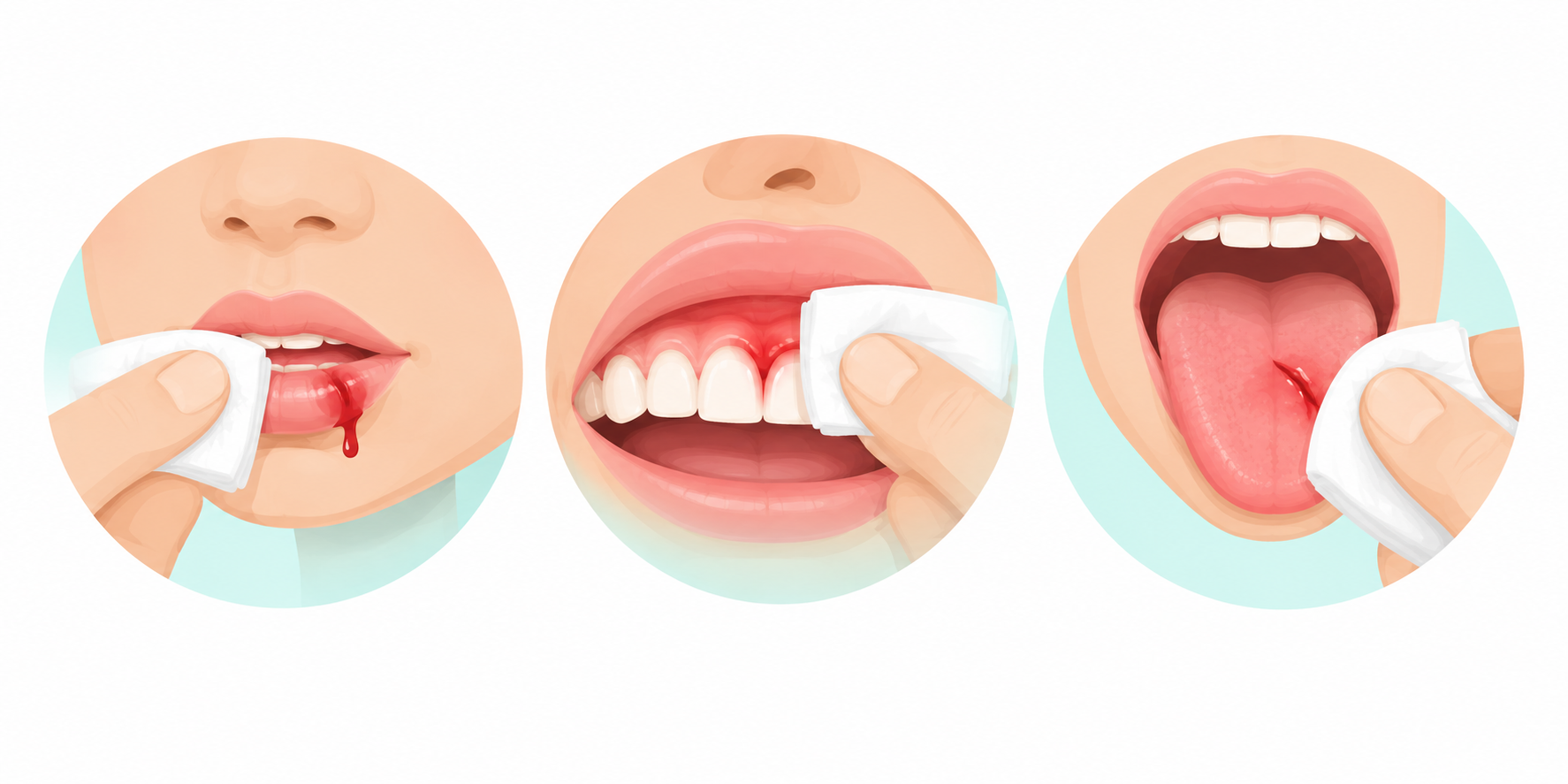
A child has bitten their tongue or lip.
This is very common and usually minor. Apply pressure as above. Offer cold water or an ice lolly for comfort. Seek advice if bleeding doesn’t stop or the cut gapes open.
There’s a cut inside the lip against the teeth.
These are common after a blow to the mouth. Small ones often heal without stitches. If the cut is deep, or there’s a tooth fragment that can’t be found, get it checked. Fragments can sometimes become lodged in the lip.
The bleeding is from the gum around a tooth.
Press with folded gauze. If the tooth is also loose or moved, see what to do if a tooth becomes loose after an injury or what to do if a tooth is pushed in, out or sideways.
The person takes blood-thinning medication.
Bleeding may take longer to stop. Keep the pressure on and seek medical advice sooner if it continues.
A small number of mouth cuts need stitches or glue, usually where the edges gape, where the lip border has been crossed, or where the tongue has a large flap. Many heal well without any treatment. The clinician will also check the teeth, the jaw and for any fragments lodged in the soft tissue.
Mouth wounds heal quickly, but see a doctor or dentist if, in the days afterwards, you notice:
Apply pressure, keep the person upright and calm, and check the teeth once bleeding has settled. If the bleeding doesn’t stop within 10 minutes, or there was any head injury, treat it as urgent and contact the parent or carer while arranging care. See Dental Trauma First Aid for Schools and Dental Trauma First Aid for Sports Coaches.
This guide does not replace assessment by a doctor, dentist or emergency service. It reflects current UK guidance, reviewed by Dr Yousuf Ibrahim, BDS.
About the author
General Dental Practitioner and Founder of ToothRevive
Published on dentistry.co.uk: “Dental trauma is a first aid problem, not just a dental one”, 7 October 2026.
The first few minutes can make all the difference.
Our Dental Trauma Kit contains everything you need to act fast and protect a knocked-out tooth.
Enter your email to unlock this free resource.
Clinically verified
Written by Dr Yousuf Ibrahim, a UK-registered dentist, in line with current dental trauma clinical guidelines.